

Why Dorm Rooms Benefit from Air Purification
Dorm rooms concentrate several indoor air quality challenges in a small space. Two occupants in a small room generate twice the skin cell shedding, exhaled moisture, and activity-related particle generation of a single-occupant space. Shared HVAC systems that circulate air between rooms and through shared corridors bring particles from adjacent spaces that a private residence would not encounter. Limited window ventilation — often restricted by building policy or weather — reduces the air exchange that would otherwise dilute indoor particle concentrations.
Move-in season adds an additional particle load. Unpacking cardboard boxes releases particulate stored in the corrugated material. Laundering and unpacking textiles releases fabric fibers. Settling into a space that has been vacant over the summer stirs up accumulated dust. The first two to three weeks of a semester are typically the highest-particulate period of the academic year in a dorm room.
Students with allergies or asthma find dorm environments particularly challenging because the combination of shared HVAC, higher occupancy density, and limited control over cleaning frequency in shared spaces increases allergen exposure compared to a private home where the occupant controls all of these variables.
What to Look for in a Dorm-Appropriate Unit
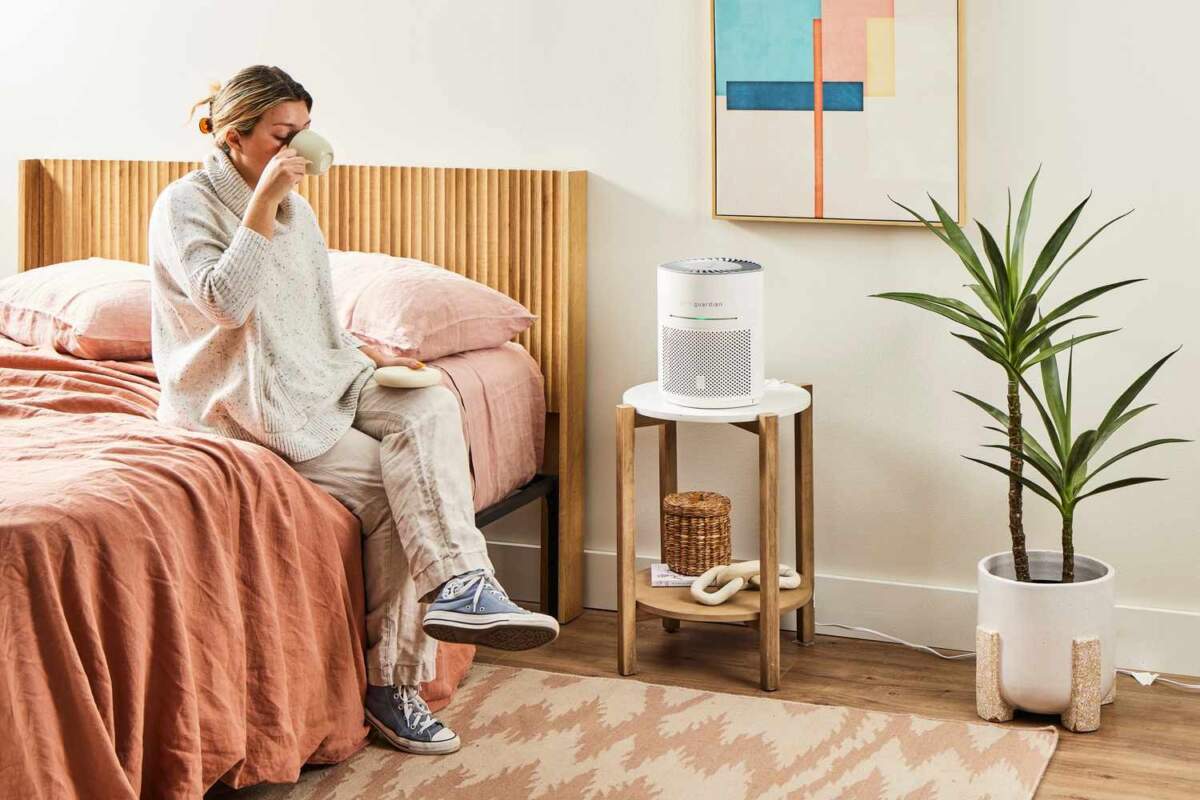
Dorm room air purifier for move-in season needs to balance filtration effectiveness with the practical constraints of dorm living: limited floor space, shared electrical outlets, and noise sensitivity in a space where a roommate may have a different schedule. Compact units that sit on a desk or dresser rather than requiring floor space, with low power draw and operating noise below 30 decibels at continuous low speed, fit the constraints better than larger residential units.
CADR appropriate for the typical dorm room size — most double rooms range from 150 to 250 square feet — is achievable in compact form factors. Targeting a CADR of 100 to 150 cfm provides four to six air changes per hour in a standard double room, which is adequate for general air quality maintenance and allergen reduction.
EPA Indoor Air Quality identifies higher occupant density as one of the factors that elevates indoor air quality concerns, citing the increased particle generation, CO2 accumulation, and moisture from breathing that characterize shared small spaces. Their guidance on ventilation and air filtration for high-occupancy settings is directly applicable to the dorm room context.
Roommate Coordination and Practical Operation
Operating an air purifier in a shared dorm room requires coordination with the roommate, whose preferences about noise, placement, and air circulation will affect whether the unit actually runs consistently. A unit that the roommate finds disruptive — either from noise or from perceived draft — will be turned off or moved to an ineffective location regardless of the purchasing student’s preferences. Choosing a unit quiet enough that it is unlikely to be a source of conflict is a practical selection criterion alongside filtration performance.
Placement in a dorm room is constrained by outlet locations, furniture configuration, and shared space norms. A compact unit on a desk or dresser near the center of the room provides better air distribution than one tucked in a corner behind furniture. Discussing placement with the roommate before move-in — during the communication that happens before the semester starts — prevents the awkward conversation about moving the unit after it has already been set up.
Filter or collection plate maintenance in a dorm environment should be planned before the semester starts. Knowing the cleaning schedule and having the necessary supplies — for washable filter units, knowing where to dry the plate, which can take several hours — prevents the situation of discovering that the maintenance cycle requires logistical planning that was not anticipated.
Leave a Comment